
I Had My First Child Ten Years After I Left My Home Country
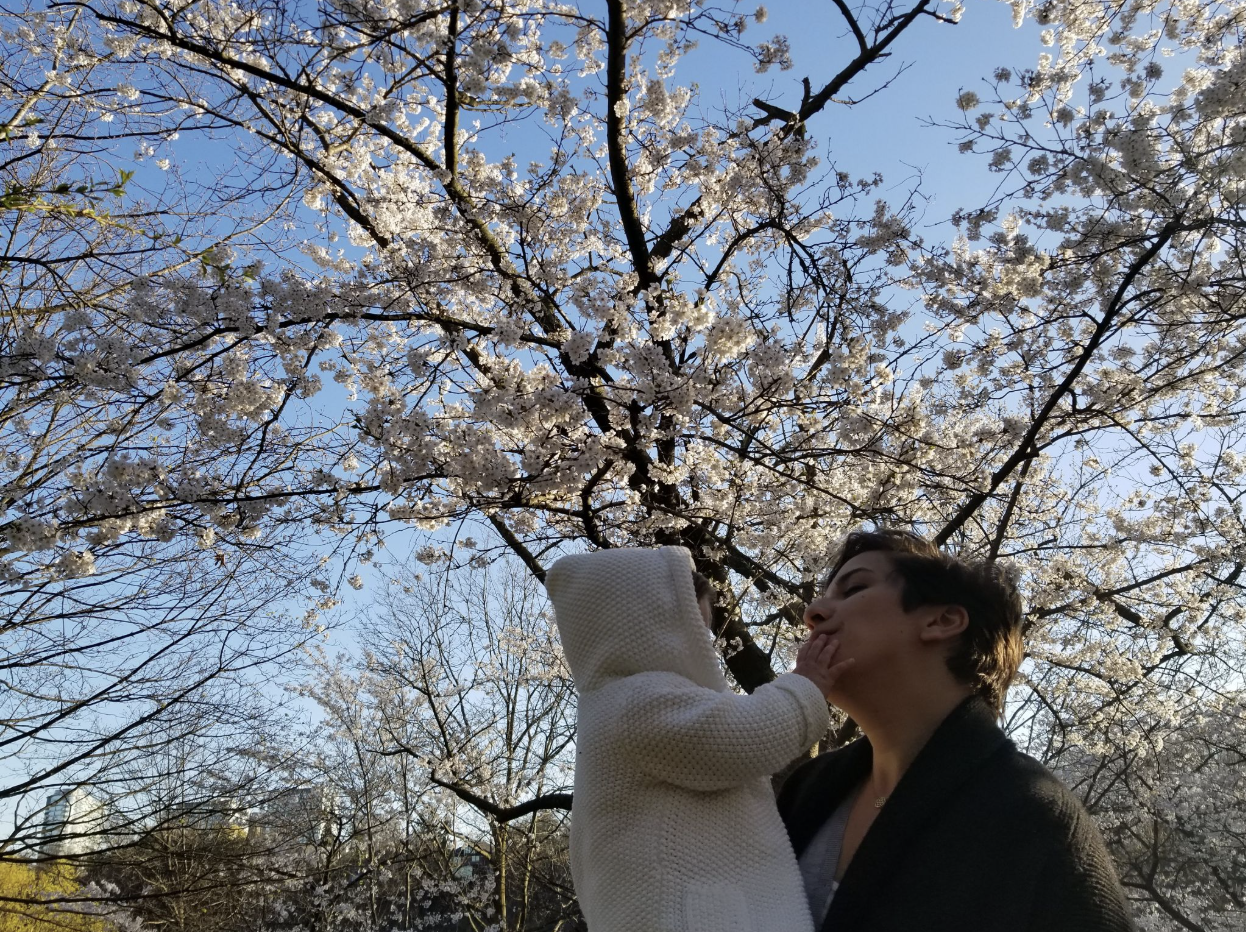
Ten years is a long time.
Long enough to learn a new country, build relationships, establish a career, understand the culture, and create a life that feels like your own. Long enough to believe that you have integrated, that you know who you are here.
And then you become a parent.
For me, motherhood brought parts of my story back to the surface that I didn’t necessarily know were still there.
Suddenly, ordinary moments could feel much bigger than they were. My child is feeling left out. Struggling with a friendship. Feeling embarrassed. Not being invited somewhere. Having difficulty at school. Feeling different.
Sometimes I wasn't only seeing my child in those moments.
I was seeing myself.
My own insecurities, fears, experiences of belonging and not belonging, and the things I had learned to push through over the years could quietly enter the room.
I think this can be particularly confusing when you have spent much of your life being the person who functions.
I was an immigrant who learned how to adapt. Like many immigrants, I became very good at figuring things out, moving forward, working hard, and building a life. From the outside, that can look like confidence and resilience.
But becoming a parent has a way of finding the places underneath all that competence.
For someone who is used to being capable and high-functioning, those places don't always announce themselves as old wounds or attachment patterns. Sometimes they sound much simpler:
Am I doing this right?
Why can't I handle this better?
What if I'm failing my child?
Why does this affect me so much?
Self-doubt can become surprisingly loud.
When their feelings become our feelings
There have been moments when one of my children is sad and I notice how difficult it is for me simply to sit beside that sadness.
Not because I don't want to be there.
Because something in their experience touches something in mine.
Instead of only seeing their sadness, I may begin seeing my own past. I may project my fears or insecurities onto what is happening. My instinct might be to fix the situation, protect them from it, give advice, make the feeling disappear, or worry about what this experience means for their future.
And in that moment, it becomes harder to distinguish:
What belongs to my child, and what belongs to me?
This is one of the questions I keep returning to, both as a mother and as a psychotherapist.
Our children can activate attachment patterns that existed long before they did. Parenting can bring us surprisingly close to our own childhoods, our relationships with our parents, our experiences of belonging, and the ways we learned to cope.
For immigrant parents, another layer can exist.
We are raising children in a culture that may not be the one that raised us. Our children may have freedoms we didn't have, struggles we didn't anticipate, or ways of expressing themselves that are unfamiliar to us. We may simultaneously want to preserve something from where we came from and give our children something different.
Their identity and ours can become deeply intertwined.
Is this normal?
Yes.
Having your own emotions activated by your child's experience does not make you a bad parent. Parenting is a relationship, and relationships touch our histories.
But normal doesn't necessarily mean that every pattern is helpful.
When we repeatedly respond to our children from our own fear, insecurity, or unresolved experiences, we can unintentionally ask them to carry something that belongs to us.
The goal isn't to become a parent who is never triggered.
I don't think that parent exists.
The work is noticing:
Why did that affect me so deeply?
Am I responding to the child in front of me, or to something from my own story?
Can I tolerate my child's sadness without immediately trying to remove it?
Can my child have an experience that is different from mine?
That awareness can create a little bit of space between our history and our response.
Our children don't need perfect parents
I also don't believe that healthy parenting means hiding our vulnerability from our children.
There is something powerful about a parent being able to say, in a way that fits their child's age and emotional capacity:
"I think I got worried and reacted too quickly."
"That was about some of my own fears, not something you did."
"I'm sorry. I want to understand what this was like for you."
Of course, children shouldn't become responsible for processing their parents' emotions. There is a difference between sharing vulnerability and asking a child to take care of us.
What we share needs to fit within their developmental understanding and their capacity to receive it.
But repair matters.
Acknowledging our shortcomings does not take away our authority as parents. It can show our children that relationships can hold mistakes, conversations, accountability, and reconnection.
I am still learning this.
Sometimes I catch myself quickly. Sometimes I recognize the pattern much later.
But perhaps that is part of parenting too, not arriving at some final version of ourselves, but becoming increasingly curious about what belongs to us, what belongs to our children, and where the two have become tangled.
Immigration changed me.
Motherhood changed me again.
And raising children away from the country where I was raised has made me revisit parts of myself I thought I had already understood.
Maybe our children don't only need us to guide them as they grow.
Sometimes, without ever intending to, they invite us to look again at our own stories.
This is part of mine. What is your story?
Written by Reyhane Sheikh, Registered Psychotherapist (Qualifying), MA https://www.reyhanesheikhpsychotherapy.com/
